
A Good Case Costs Less Than One Repair
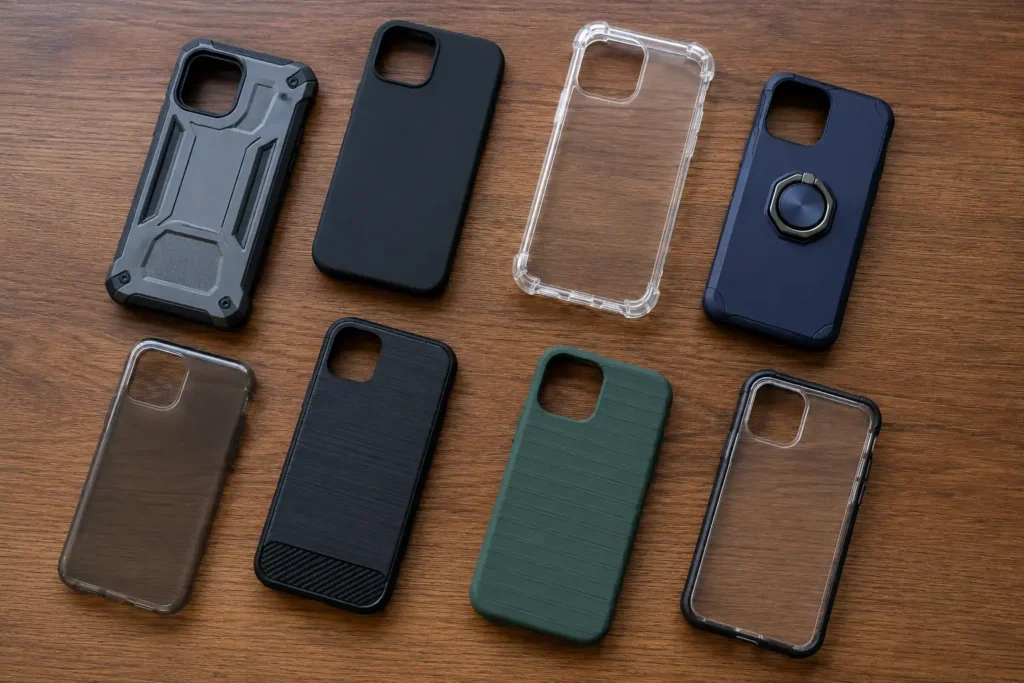
A phone case feels like a small purchase. A cracked screen doesn’t. That gap is the whole reason this guide exists. The best phone cases for protection aren’t the flashiest ones. They’re the ones that actually survive a real drop, on a real sidewalk, on a bad day.
This guide skips the filler. You’ll learn what actually makes a case protective, then see real options organized by what you actually need.
Quick Answer: What Makes a Phone Case Actually Protective?
Real protection comes down to a few specific things. Look for a drop rating, ideally tested to military standard MIL-STD 810G, which simulates repeated drops from several feet onto hard surfaces. Look for raised edges around the screen and camera, so the case touches the ground first, not the glass. Then Look for corner reinforcement or air-cushion technology, since corners take the hardest hits. Marketing language like “military grade” means very little without an actual published drop rating behind it.

Rugged Cases: Best for Job Sites, Kids, and Frequent Drops
Rugged cases prioritize survival over style. They’re thicker, but that thickness buys real shock absorption.

OtterBox Defender Series remains a go-to name here. It layers a hard shell over a soft interior and adds a port-covering design that keeps dust and debris out, which matters for construction, warehouse, and outdoor work.
SUPCASE Unicorn Beetle Pro takes a similar layered approach at a lower price point, with a built-in screen protector and kickstand that make it popular for work phones and kids’ devices.
UAG (Urban Armor Gear) leans into a more angular, technical look while still delivering serious drop protection, appealing to buyers who want rugged protection without the bulkiest possible design.
Slim Cases: Best for Everyday Carry Without the Bulk
Slim doesn’t have to mean fragile. These brands focus on protecting the corners and edges without adding much thickness.
Spigen builds a strong reputation on air-cushion corners and reinforced edges in a genuinely thin profile, making it a reliable, affordable everyday pick.
Mous takes a firmer, more structured approach in a similarly slim form factor, often using premium finishes like leather or carbon-fiber-style textures for buyers who want protection without a rugged look.
Casely focuses on balance, keeping cases light and comfortable while reinforcing the areas most likely to take an impact, which suits daily commuting and campus life.
MagSafe-Compatible Cases: Best for Wireless Charging Users
If you rely on MagSafe accessories, chargers, wallets, or car mounts, magnet strength and alignment matter as much as drop protection.
CASEKOO has built a strong reputation around consistent magnet strength and reliable MagSafe alignment, which avoids the frustrating charging drop-offs cheaper magnetic cases can cause.
Smartish combines MagSafe support with functional extras, like their well-known wallet-integrated designs, for buyers who want protection and practicality in one case.
Stylish and Clear Cases: Best When You Don’t Want to Hide Your Phone
Clear and design-forward cases used to mean sacrificing protection. That’s changed.
Casetify offers customizable, clear, and printed designs while still building in real shock-absorbing materials at the corners, so the case looks good without becoming purely decorative.
Bare Naked style minimalist cases focus on scratch resistance and a lightweight feel, keeping the phone’s original look intact while still adding a meaningful layer of impact coverage.
How to Choose the Right Case for You and best phone cases for protection

Match the case to your actual routine, not your ideal one.
- Do you work outdoors, on job sites, or hand your phone to kids? Go rugged. The extra bulk is worth it.
- Do you mostly worry about pocket drops and desk edges? A quality slim case covers most everyday risk.
- Do you use MagSafe chargers, wallets, or mounts daily? Prioritize a case with confirmed strong magnet alignment.
- Do you want your phone to still look like your phone? A well-built clear or design case can protect the corners without hiding the device.
Common Mistakes to Avoid while choosing best phone cases for protection
- Buying based on looks alone. A case can look rugged and still have a weak drop rating, or no published rating at all.
- Trusting “military grade” without a number behind it. Ask for the actual MIL-STD 810G rating or drop-height claim, not just the phrase.
- Skipping the camera and screen lip. A case that sits flush with the glass and camera lens offers far less real protection.
- Assuming thicker always means safer. Good engineering matters more than raw bulk, especially in the corners.
- Ignoring your phone’s actual weak points. Foldables, large-screen phones, and glass-back designs each have different risk areas worth matching to the right case type.
Expert Tip
Expert Tip: Check the corners first. Most drops land on a corner, not flat on the screen or back. A case with reinforced, slightly raised corners prevents more cracked screens than almost any other single feature.
Frequently Asked Questions about best phone cases for protection
Rugged cases with a published MIL-STD 810G drop rating and reinforced corners generally offer the strongest real-world protection.
Not automatically. Good engineering in the corners and edges matters more than raw thickness, though rugged cases do generally add an extra safety margin.
It’s a military testing standard some case brands use to validate drop protection, simulating repeated drops from several feet onto hard surfaces.
Well-built clear cases can offer solid everyday protection, but they typically won’t match a dedicated rugged case for extreme drops or job-site use.
A case with a raised lip around the screen reduces the chance of the glass hitting the ground directly, which lowers your risk of a crack in the first place.
A well-made MagSafe case with strong magnet alignment usually charges normally. Cheaper or poorly aligned cases can cause charging speed issues or drop-offs.
Replace it once you see cracking, peeling, or a corner that no longer sits flush, since damaged cases lose much of their protective value.
No case eliminates risk entirely, but a well-built one prevents the majority of everyday drop and impact damage.
Conclusion
The best phone cases for protection aren’t about brand hype. They’re about published drop ratings, reinforced corners, and a design that matches how you actually use your phone. Whether you need rugged protection for a job site or a slim, everyday case for pocket carry, the right choice usually costs far less than the repair it prevents.
If your phone already has a crack, drop damage, or a battery that’s seen better days, Phone Expert Phone Repair & Designs can diagnose the issue and get it fixed right. Contact us or stop by for a diagnostic check to get a straight answer on your repair.